← All posts
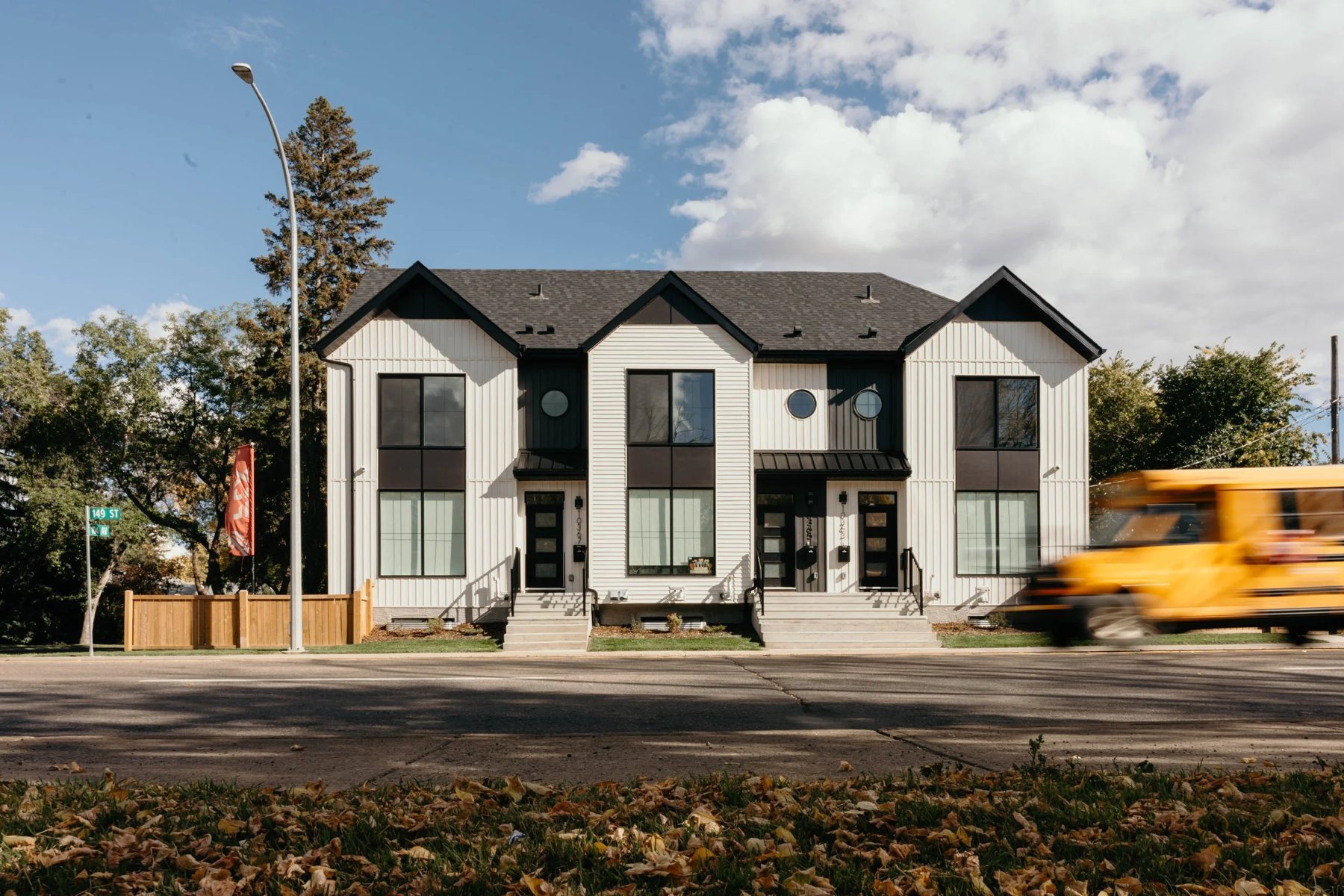
Few things get Edmontonians talking like the house going up next door. This fall the infill debate jumped from community league meetings to the legislature, and if you own, are buying or are selling in a mature neighbourhood, it’s worth knowing where things stand.
How we got here
In 2024 Edmonton brought in a new zoning bylaw that opened most residential lots to more homes. Many mid-block lots could now hold row houses or small multi-unit buildings, often up to eight units, in neighbourhoods that used to be mostly single-family. Supporters saw more housing choice and better use of existing roads and pipes. Critics saw buildings that felt too big for their streets, and worried about parking, trees and the pace of change. Council adjusted the rules in 2025 after a long public hearing, but the argument never really went away.
The province steps in
On October 8, Premier Danielle Smith announced that Alberta would order Edmonton to go back to its older infill rules on housing types, density and height, and to bring back minimum on-site parking requirements the city dropped in 2020. The province said the current approach was too permissive and that growth was outpacing the services neighbourhoods rely on. Municipal Affairs Minister Dan Williams described it as a pause for “sober second thought” rather than an ultimatum.
A written directive followed later in October. The city has roughly 90 days to change its rules, then 18 months to draft a new bylaw the minister is satisfied with. The province has also said that infill projects that are already approved can go ahead as planned.
The twist: the old rules aren’t always smaller
Here’s where it gets complicated. When city staff mapped the order out, they found that reverting as written would put close to half of today’s small-scale residential lots back into older zones. In some mature neighbourhoods that were zoned for row housing under the old system, that would remove the mid-block unit limits council added more recently. Depending on lot size, the city says that could open the door to 16-plexes or even much larger buildings in areas like Westmount, Bonnie Doon, King Edward Park and parts of Garneau.
In other areas, including all of Mill Woods, Callingwood and Twin Brooks, the city says lots would return to older rules allowing buildings around 10 metres tall with up to 12 units on larger lots. At the end of October, council voted 12–1 to send the minister two options, the order exactly as written or a hybrid version staff put together, and asked him to confirm in writing which he wants. A public hearing on the new rules is tentatively expected in late January.
Both sides, in their own terms
Those who welcome the order say infill in some areas moved faster and bigger than neighbours expected, that parking and infrastructure haven’t kept up, and that residents didn’t feel heard. Groups like the Residential Infill Working Group have described it as a chance to reset the conversation between the city and the people living with the changes.
Those who oppose it, including Mayor Andrew Knack and housing advocates like Grow Together Edmonton, argue that limiting infill pushes growth to the edge of the city, where new roads and pipes cost taxpayers more, and makes housing less affordable. They also object to the province overriding a council that voters elected in 2025. The mayor has said the city is looking at its legal options.
Both camps raise real concerns, and reasonable neighbours land on different sides. Our job isn’t to pick one for you. It’s to help you understand what the rules mean for a specific address.
What this means if you’re buying or selling
- Selling an older home on a larger or corner lot? Builders are a big part of the buyer pool for those properties, and uncertainty can make them cautious. It’s worth getting advice on timing and pricing before you list.
- Buying in a mature neighbourhood? Look at the lots around the one you’re considering, not just the house. What could be built next door may change more than once over the next 18 months.
- Already approved projects are expected to proceed, so a permit sign on your street today likely means that building is still coming.
- Nothing here is final. The written rules, the January hearing and any court challenge could all change the picture. We’ll update this post as things move.
Information current as of November 4, 2026, drawn from reporting by Global News, CTV News Edmonton and the Edmonton Journal. Sources: province orders rollback, approved projects can proceed, city’s warning on larger buildings.